I have a theory about men. They don’t read.
Now, before anyone gets offended, I realize this is a sweeping generalization, and there are undoubtedly millions of men wandering around out there reading things at this very moment. Books. Newspapers. Instruction manuals. Emails. Possibly even this blog. 🙃 Although, if my theory is correct, a significant percentage of them have already skipped this paragraph.
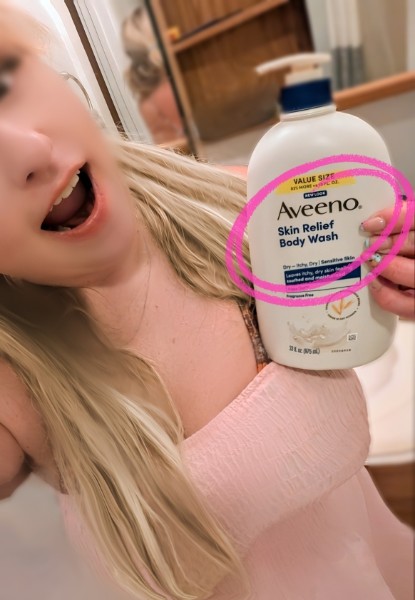
Recently, the brand of body wash I keep in my shower changed its label. Same big brand name. Same bottle. Same pump. Same place in the shower. But someone in marketing apparently decided to add the words “lotion” and “soft skin” before the rather important words BODY WASH. Same font. Same size. You just have to keep reading.
Apparently, that was enough. One man looked at it, saw “lotion,” and decided it couldn’t possibly be soap. Rather than reading the rest of the label, he went searching for an alternative and somehow landed on the pink foaming hand soap by the sink.
Then it happened again.
And again.
These are grown, intelligent, successful men who have been showering at my house for years. Nothing about the basic concept of showering had changed. There was still water. There were still towels. There were still washcloths. The body wash label had only added “soft skin” and “lotion” before the words “body wash.” And this had confounded them. Naturally, I reached the only reasonable conclusion. Men don’t read.
And then I started noticing evidence everywhere. Instructions ignored. Signs overlooked. Questions asked when the answer is sitting three inches away in perfectly legible English. See? I knew it.
Or maybe I was just proving myself right.
That’s the problem with confirmation bias. Once we believe something, we have a remarkable ability to notice everything that supports it and overlook what doesn’t. And sometimes the evidence really is there. I watched those men not read the bottle. But once I’ve decided “men don’t read,” every man who skips the instructions becomes another piece of evidence for my case, while every man who carefully reads every word barely registers. My brain isn’t investigating anymore. It’s prosecuting. And apparently it has a very high conviction rate.
That got me wondering how often we do this with things that matter considerably more than body wash. We decide someone is selfish, and suddenly every selfish thing they do stands out while their kindness becomes an exception. We decide someone doesn’t like us, and a short text message becomes evidence. A missed phone call becomes evidence. A look on their face becomes evidence. We decide what kind of person someone is based on their appearance, age, income, education, or family situation.
Sometimes what someone does for a living alone is enough. That is enough for us to decide they’re dishonest. Morally questionable. Probably hiding something. Motivated only by money. Willing to say whatever people want to hear. Comfortable bending the truth when it benefits them. Maybe even leading some sort of secret double life. But I don’t want to bring politicians or Christians into this.
The point is that once we’ve decided what kind of person someone is, we start collecting evidence. The uncomfortable question isn’t whether our original impression was right or wrong. It’s whether we’re still willing to find out. Because if there is absolutely nothing someone could do to change our opinion of them, we’re probably not evaluating that person anymore. We’re defending a conclusion.
And confirmation bias doesn’t stop with other people. We do it to ourselves too. We decide we’re bad at something, and every mistake becomes proof. We decide we’re not the kind of person who can do something, and every setback confirms it. We can build an entire case against ourselves while quietly dismissing all the evidence that doesn’t fit.
I started wondering how many things I “know” about people, and about myself, aren’t things I know at all. They’re conclusions I reached somewhere along the way and have been quietly collecting evidence for ever since. Maybe that’s worth paying attention to. Being wrong about someone doesn’t always have to be embarrassing. Sometimes it means they’re kinder than we expected. Smarter than we assumed. More complicated than we gave them credit for. Sometimes the story we’ve written about someone simply isn’t their story.
So maybe every once in a while, instead of looking for another reason to say, “I knew it,” it’s worth looking for a reason to say: Huh. Maybe I didn’t.
Although I’m keeping the pink hand soap story. Some evidence is simply too compelling to throw out.
🫧🛀 Charlotte
P.S. Maybe it’s confirmation bias, or maybe I was onto something. Either way, I have officially changed brands of body wash! (And for the record, I would never put lotion in the shower. With the clean towel, clean washcloth, and literally nothing else to wash with… 🤯)